FOLEY
Footsteps added afterwards
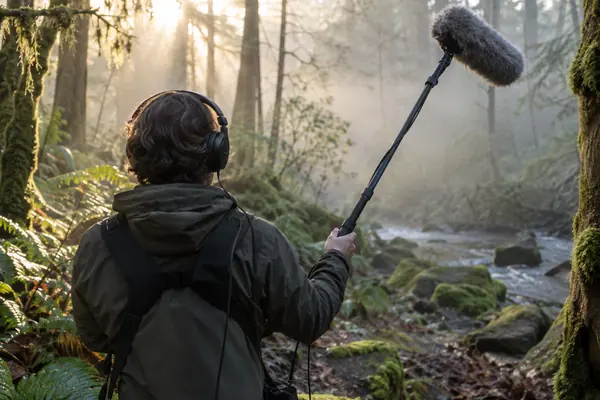
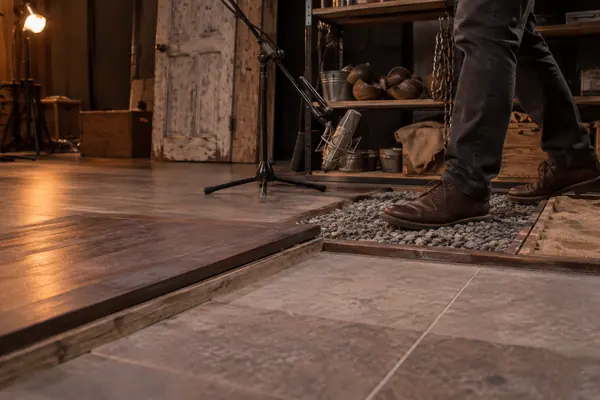
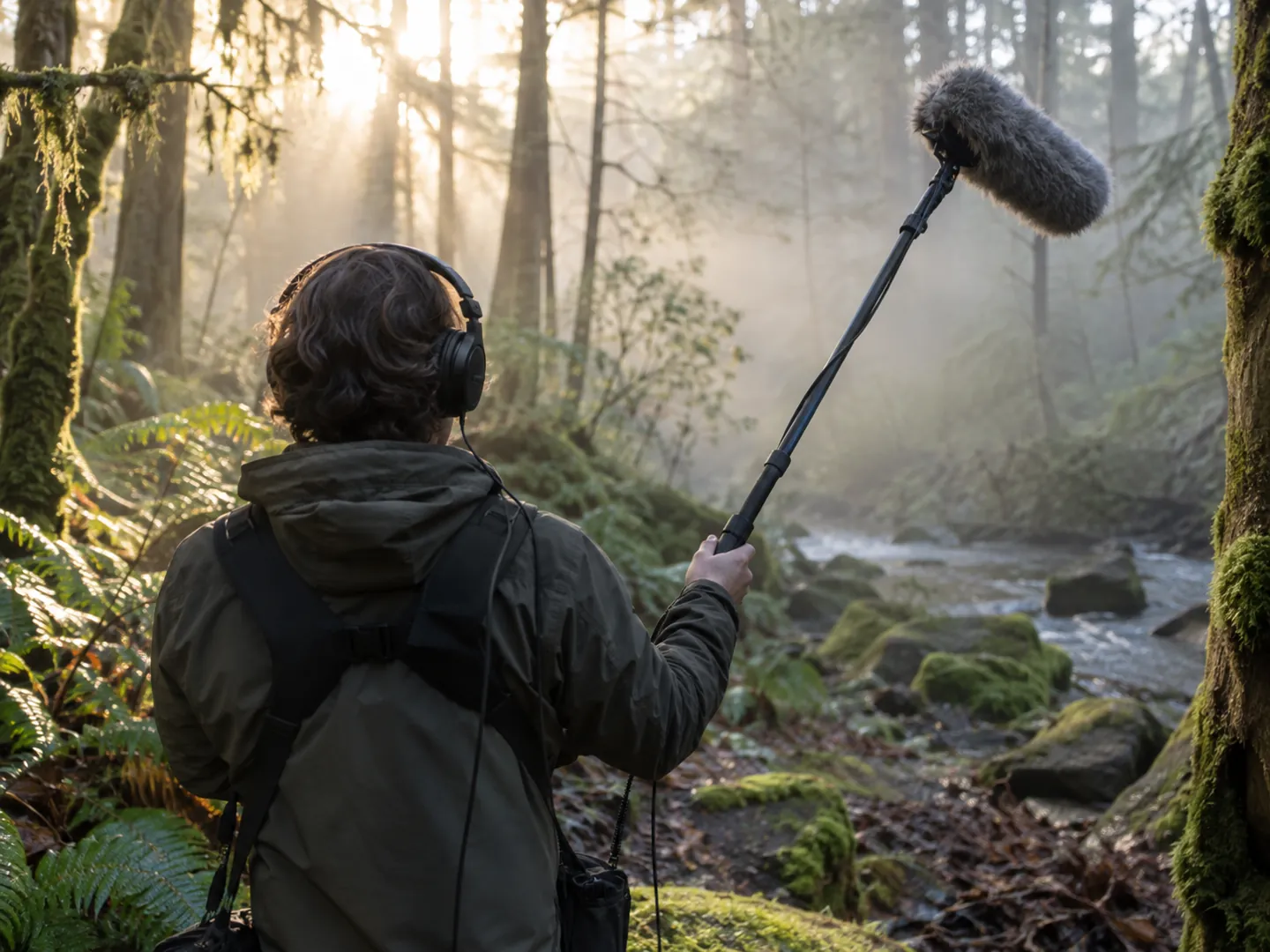
Filming focuses on capturing dialogue clearly, so footsteps and prop handling are often performed and recorded later on a Foley stage, matched to the picture.
Pick a technique soundeffectspad
Start
HOW THE SOUNDS ARE MADE
Many sounds in films and on radio were made by someone else, later.
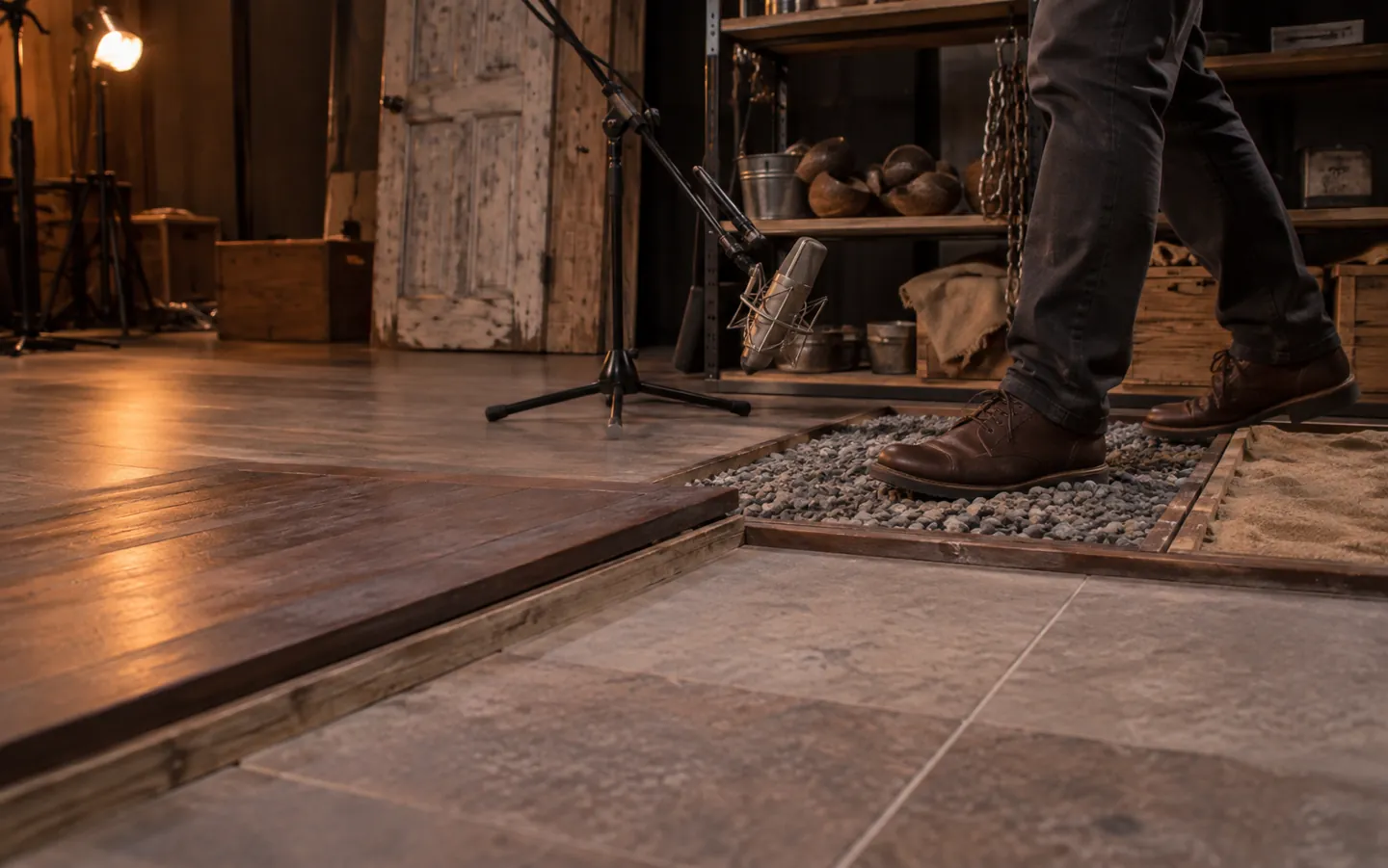
Footsteps, rustles and crunches are often performed in a studio after filming. Others were built by slowing, reversing and splicing tape. Here is how sound effects have been made, and where whole libraries of them live.
FOLEYperformed to picture
Pick a techniqueKeep in mind
THE SHORT ANSWER
Most effects come from one of three places:
a Foley stage, a manipulated recording, or a library.
FOLEY
Filming focuses on capturing dialogue clearly, so footsteps and prop handling are often performed and recorded later on a Foley stage, matched to the picture.
Pick a techniqueTAPE
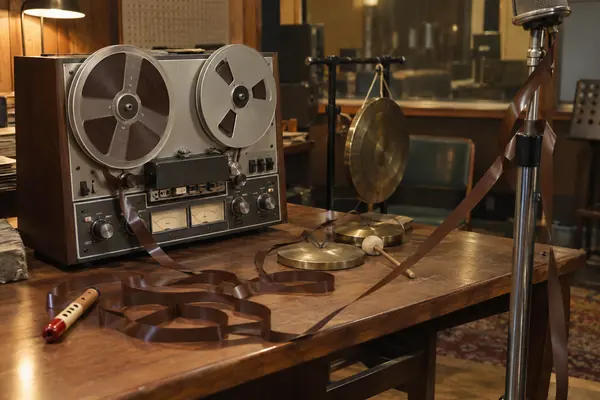
From 1958 the BBC Radiophonic Workshop built sounds by speeding up, slowing down and reversing recordings and splicing tape into loops.
Read the storyARCHIVES
In 2018 the BBC released more than 16,000 sound effects from its archive for personal, educational and research use.
See the numbersA QUICK TECHNIQUE CHECK
Pick a technique to see how it works. The bar shows how far the finished sound usually is from a plain recording of the real thing.
Productions often combine several techniques in one soundtrack.
TWO NUMBERS WORTH KNOWING
One date when electronic effects found a home,
one count of sounds anyone can now hear.
1958
Year the BBC's sound workshop opened
It was formally created on 1 April 1958 at the BBC's Maida Vale studios in London, with little budget, and ran until it closed in 1998.
RADIOPHONIC WORKSHOP · NSMM
16,000+
Sound effects released from the BBC archive in 2018
A mix of studio-made effects and real field recordings, released under the RemArc licence, first created for a project using sound to spark memories in people living with dementia.
BBC ARCHIVE · CBC RADIO
Early cinema sound had its own limits: sound recorded on a shellac disc could store only five minutes at a time, so even landmark 1920s sound films still used silent intertitles.
FOUR WAYS TO MAKE YOUR OWN
The Radiophonic Workshop rescued props from bins and junk rooms. You can start with what you have.
Step 1
Film-makers prioritise clear dialogue during filming and add footsteps and handling noises afterwards.
Step 2
Watch the scene and act out each footstep or rustle in time, as Foley artists do.
Step 3
Everyday things can stand in for something else: the workshop used gongs, whistles, bells and household objects.
Step 4
Slow a recording down, speed it up or play it backwards. Even a whistle can end up sounding like something else.
THE RADIOPHONIC WORKSHOP
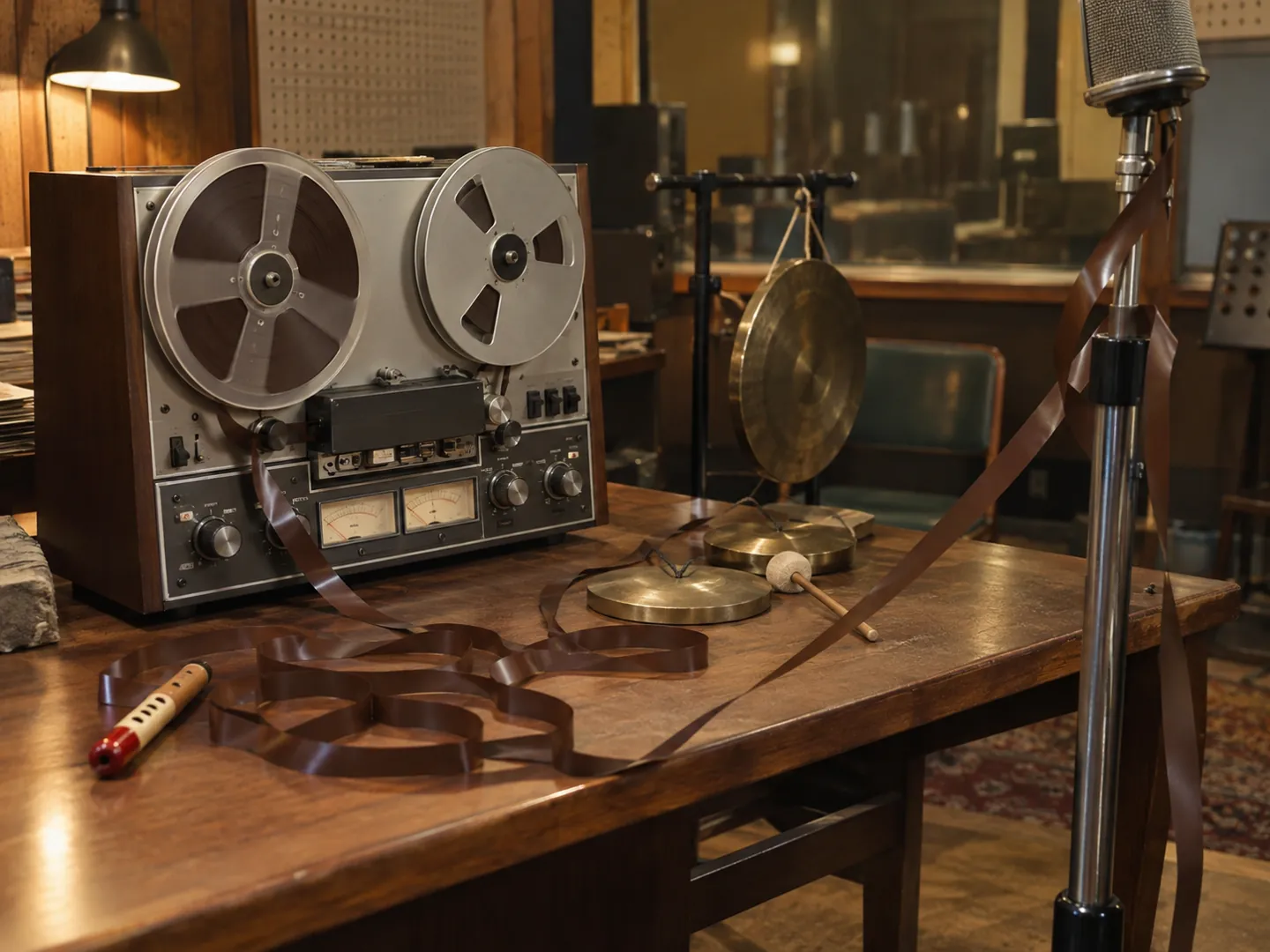
With little budget, the BBC's Radiophonic Workshop relied on manipulating recorded sound. Staff rescued bits and bobs from bins, skips and the BBC junk room, and borrowed test oscillators, including a 'wobbulator' normally used to test equipment, to make swishy, space-like sounds.
Tape loops could be several metres long. Sounds were sped up, slowed down, reversed and spliced, so even a whistle might end up unrecognisable on a soundtrack. For many people in the UK, these theme tunes, jingles and effects were their first taste of electronic sound.
Questions
The process of performing and recording sounds such as footsteps and prop handling to match a film, usually in post-production. It can replace or add to the sound recorded during filming.
During filming the priority is capturing dialogue clearly, so small details such as footsteps and prop handling are often recorded separately afterwards.
A BBC unit formally created on 1 April 1958 at Maida Vale, London, to make electronic sounds, effects and music for radio and television. It closed in 1998.
A technique that takes recorded sounds and changes them by slowing down, speeding up or playing them backwards, then layers or splices them into a montage.
In 2018 the BBC released more than 16,000 effects from its archive for personal, educational and research purposes under its RemArc licence. Check the licence terms before using them.
Destination
ABOUT THIS NAME
soundeffectspad.com is part of the DoodleSale portfolio. It isn't in an auction right now, but you can ask about leasing it.